 Image 1 of 5
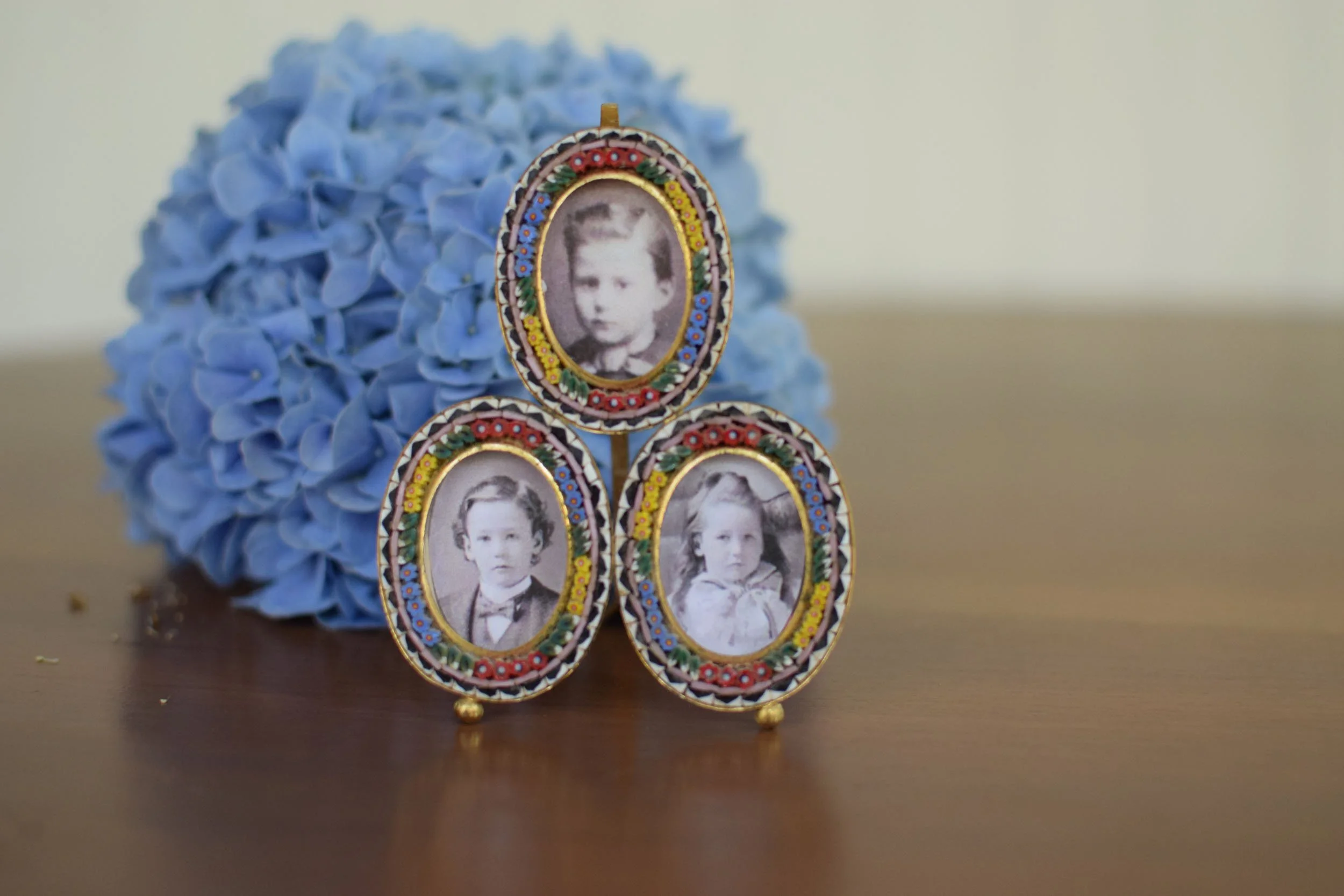 Image 2 of 5
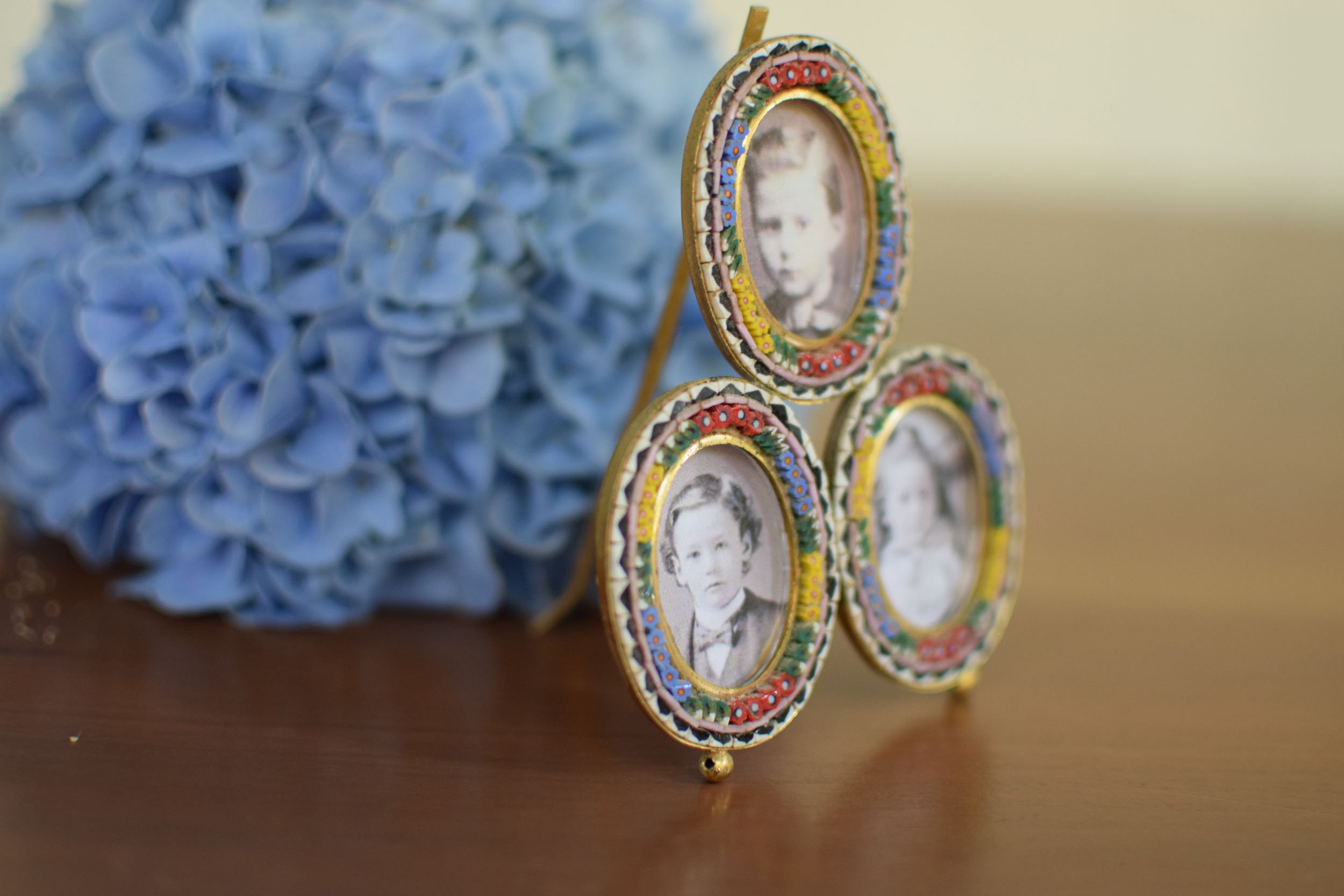 Image 3 of 5
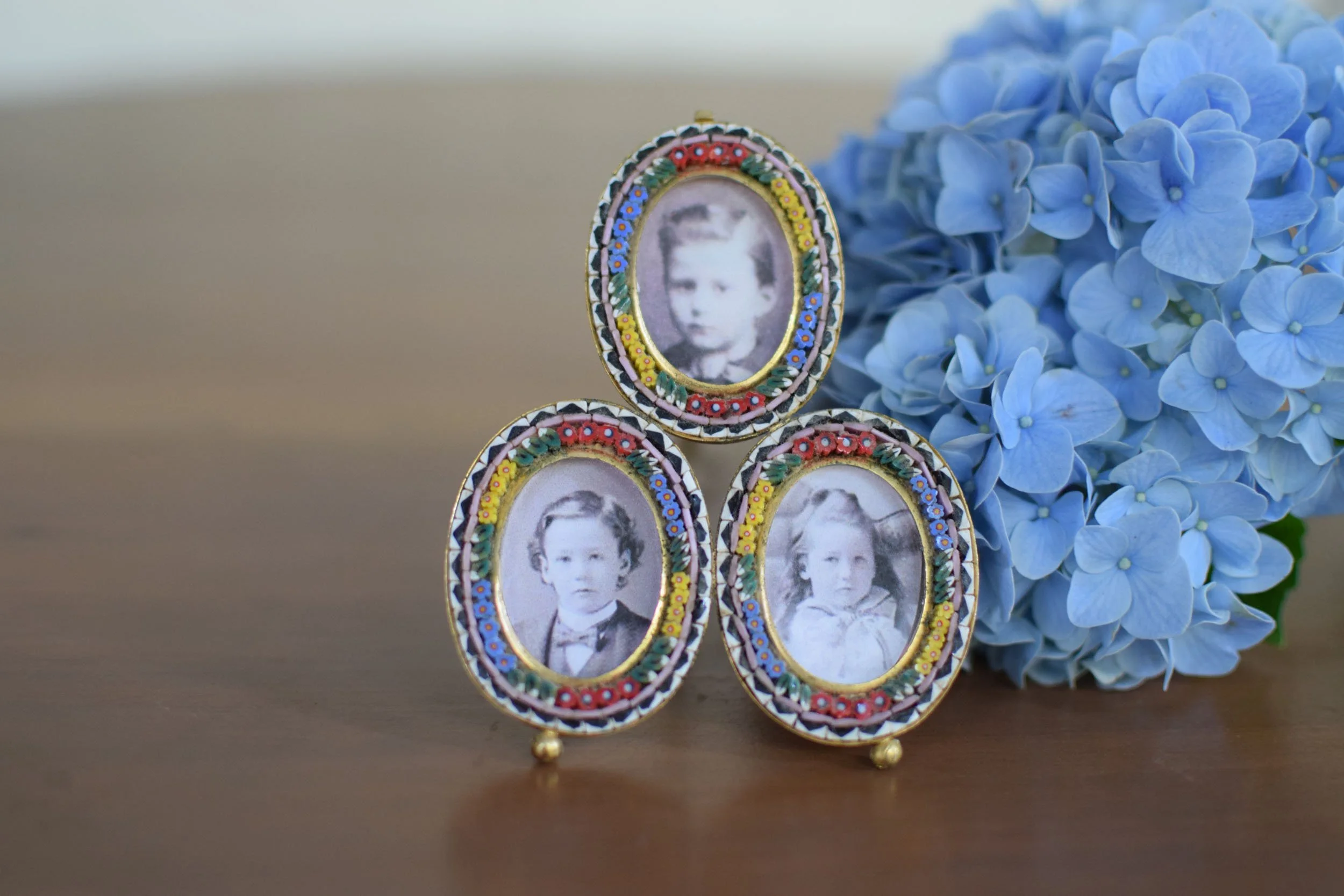 Image 4 of 5
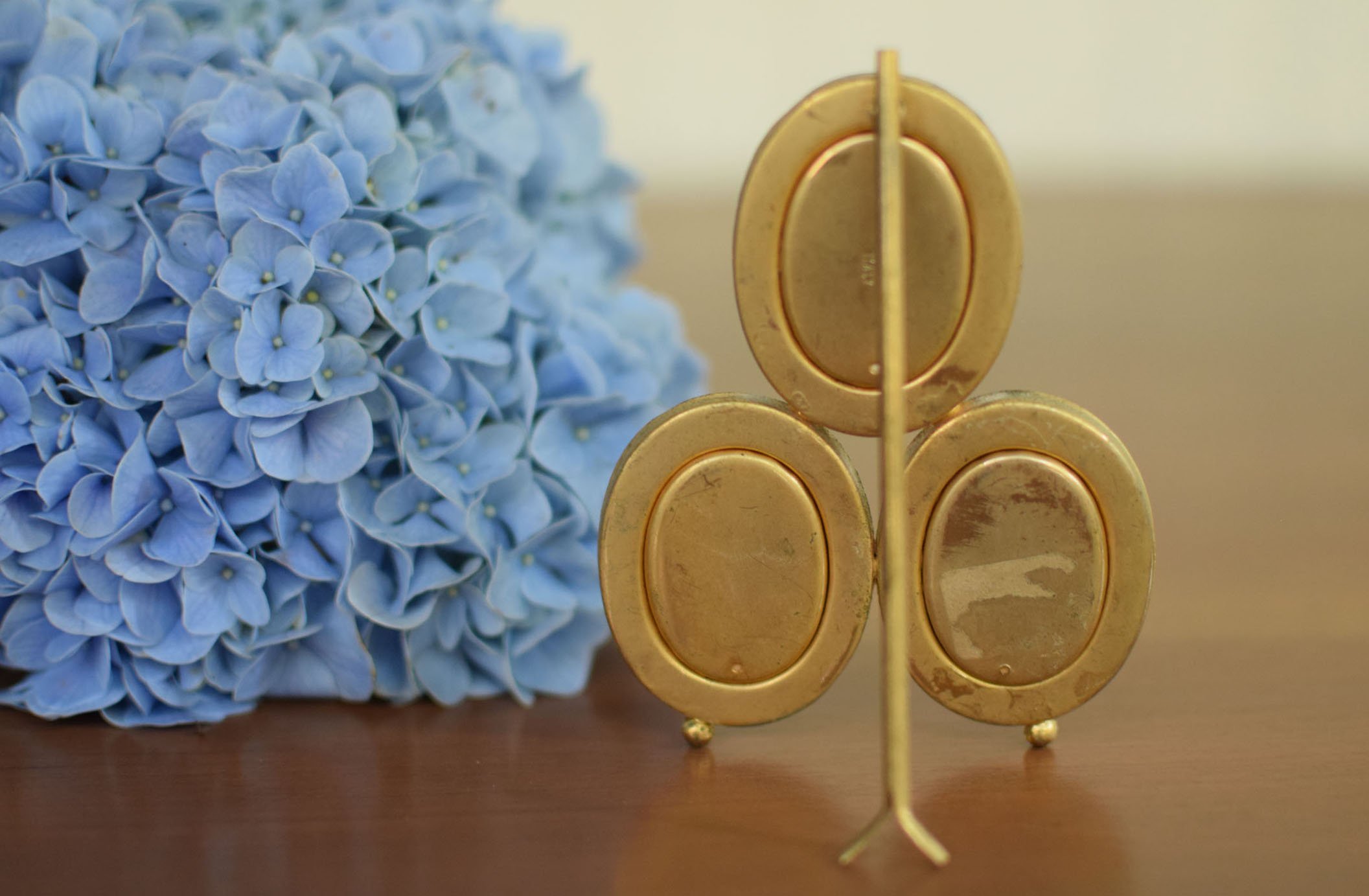 Image 5 of 5
This pretty triple-frame was crafted in mid-20th-century Italy and carries forward that long tradition: meticulous technique, minute tesserae, and designs meant to frame treasured memories with the same care lavished on the scenes they surround.
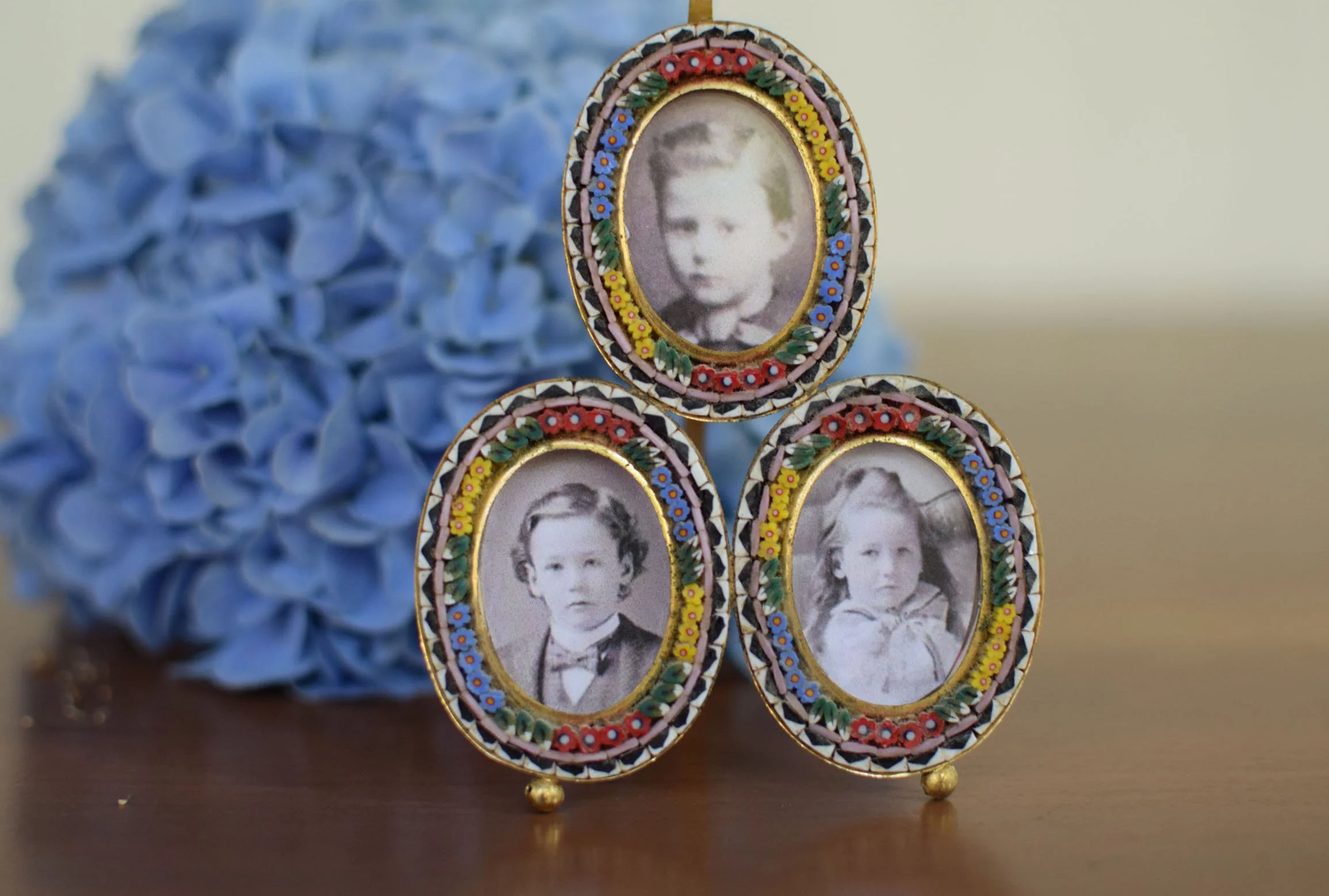
Micromosaic — are exquisite, handcrafted decorative picture frames made by setting thousands of microscopic glass or enamel pieces, called tesserae, into metal or wooden bases. This unusual triple photo frame is no exception: made in Italy circa the 1940s, every tessera remains in place and the piece is in excellent condition. It measures 3” tall x 3” wide at the base.
How they are made
Filati threads: Artisans melt traditional glass and draw it into extremely fine filaments.
Hand-cutting: These filaments are then cut into tiny cubes, typically smaller than 3 millimeters.
Stucco setting: Each microscopic tessera is pressed by hand into a specially prepared adhesive ground to form the intricate pattern.
History and motifs
Grand Tour souvenirs: Micromosaic originated in Roman and Vatican workshops in the late 18th century and became prized keepsakes for travelers on the Grand Tour.
Common designs: Borders often display vivid floral garlands, geometric repeats, or miniature pastoral and architectural vistas.
Ref. Fr 2067 T. - Free Shipping _
This pretty triple-frame was crafted in mid-20th-century Italy and carries forward that long tradition: meticulous technique, minute tesserae, and designs meant to frame treasured memories with the same care lavished on the scenes they surround.
Micromosaic — are exquisite, handcrafted decorative picture frames made by setting thousands of microscopic glass or enamel pieces, called tesserae, into metal or wooden bases. This unusual triple photo frame is no exception: made in Italy circa the 1940s, every tessera remains in place and the piece is in excellent condition. It measures 3” tall x 3” wide at the base.
How they are made
Filati threads: Artisans melt traditional glass and draw it into extremely fine filaments.
Hand-cutting: These filaments are then cut into tiny cubes, typically smaller than 3 millimeters.
Stucco setting: Each microscopic tessera is pressed by hand into a specially prepared adhesive ground to form the intricate pattern.
History and motifs
Grand Tour souvenirs: Micromosaic originated in Roman and Vatican workshops in the late 18th century and became prized keepsakes for travelers on the Grand Tour.
Common designs: Borders often display vivid floral garlands, geometric repeats, or miniature pastoral and architectural vistas.
Ref. Fr 2067 T. - Free Shipping _